Build a Solana Trading Signal Journal
A Solana trading signal journal keeps the alert, public transaction and simulated decision in a record you can review. It lets you check how an alert reached you and whether enough data was available to use it in your practice workflow.
Summarize with AI:
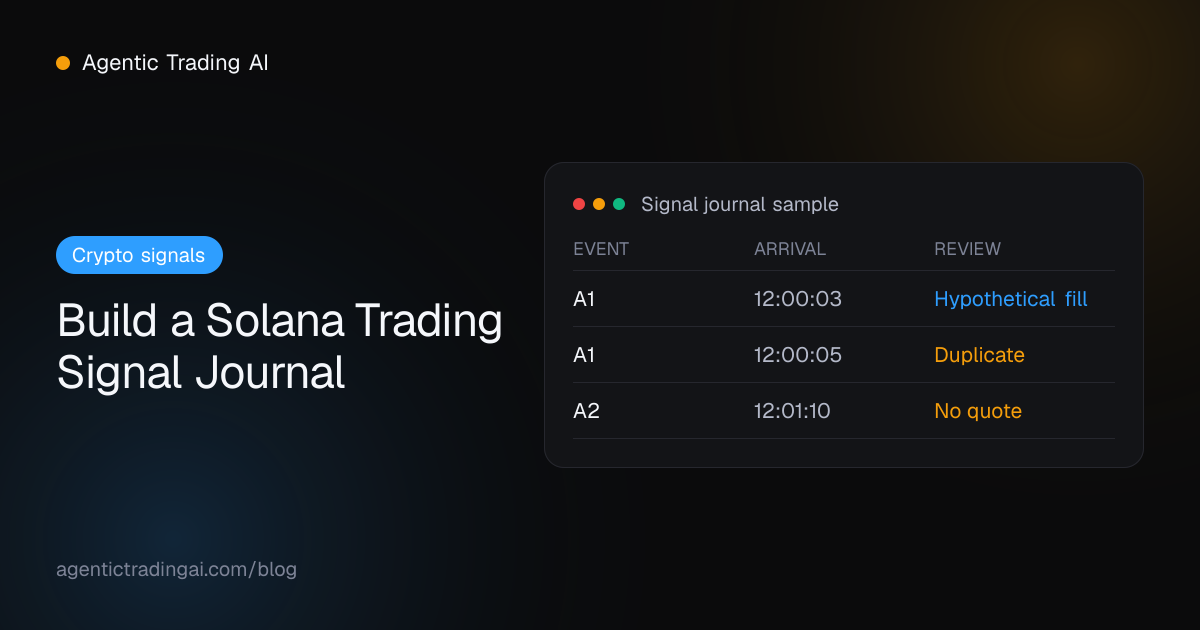
Record event time and receipt time separately
An on-chain event can show up in one service before another. Put the original event time and the first timestamp your journal actually received the alert in separate UTC columns. If an event time is missing, leave it blank and retain the slot or transaction signature for lookup. Calculating the difference between the two timestamps helps identify delays in your source or notification pipeline.
You can start with a spreadsheet and a manually copied alert. Once the fields are consistent, a read-only script can collect them. Keep the source record alongside any simplified fields so a new parser never forces you to reconstruct what the alert originally said.
What goes in a journal row?
- Asset and venue. Save the token mint address and pool or venue identifier. Keep the ticker as a display label.
- Event reference. Record the transaction signature and, when available, the instruction or provider event index.
- Timing and source. Include event time, time first seen, alert source, and the raw message or a link to it.
- Decision and evidence. Record the rule version, quote timestamp, intended practice size, and status such as skipped, unfilled or paper-filled.
- Review outcome. Write why a data field was missing or a decision did not match your rules. Keep the row even if the setup failed.
Copies of the same event may arrive through two channels. Preserve both observations, then group them by an event identity you can defend. A signature may cover more than one swap, so pair it with an instruction index or comparable identifier when possible. Symbol and clock time alone are weak keys for deleting duplicates.
Review coverage before reviewing simulated returns
- Count total alerts, unique events and records with unverified identifiers.
- Compare the first observation to the event timestamp and note where delays cluster.
- Review any paper fills against the available quote at the recorded decision time.
- Pick a single change to test in the next run, such as capturing a missing field.
Keep the first week’s rows when you adjust the format. Replaying them gives you a repeatable sample for testing deduplication and timestamp handling. For delivery setup, see the GMGN wallet alerts walkthrough.
Where to cross-check a journal entry
Axiom’s overview of Solana trading views describes token pages and wallet tracking. GMGN documents its wallet activity view. Use those views to inspect an event alongside its underlying public record.
Build a Solana scanner with configurable alerts
The ChatGPT digital guide walks through token filters and Telegram alerts. You can add your own journal to record what the scanner finds.
View the ChatGPT trading bot guideKeep reading
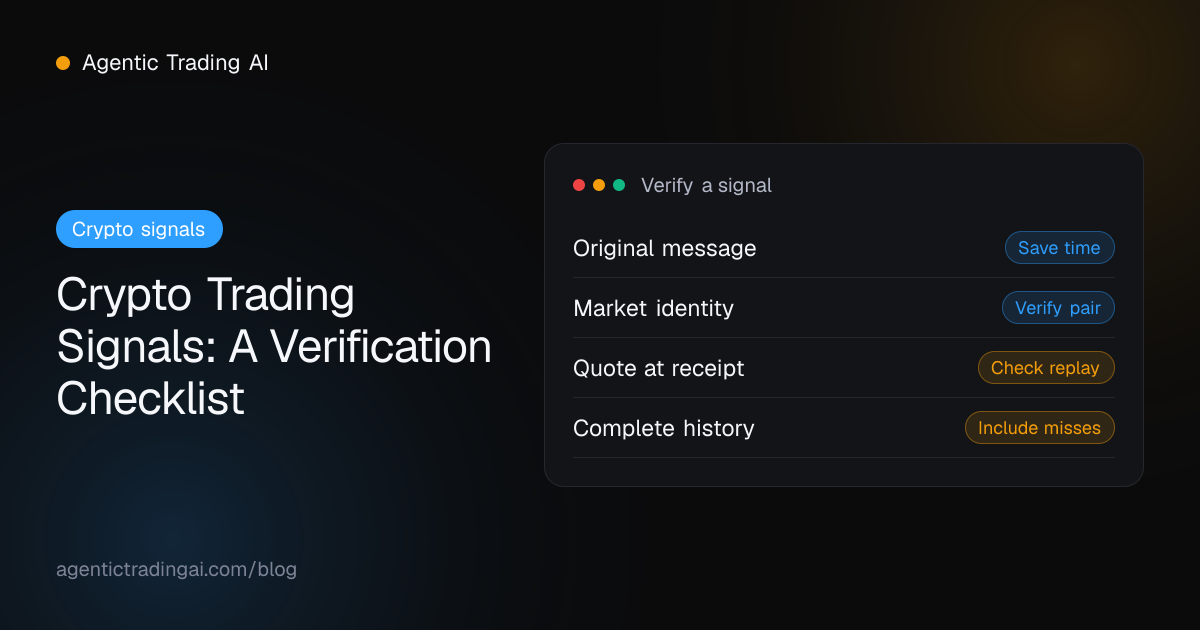 Up nextCrypto Trading Signals: A Verification ChecklistCheck crypto trading signals against original timestamps, market data and full result histories. Learn to spot missing evidence and common scam red flags.
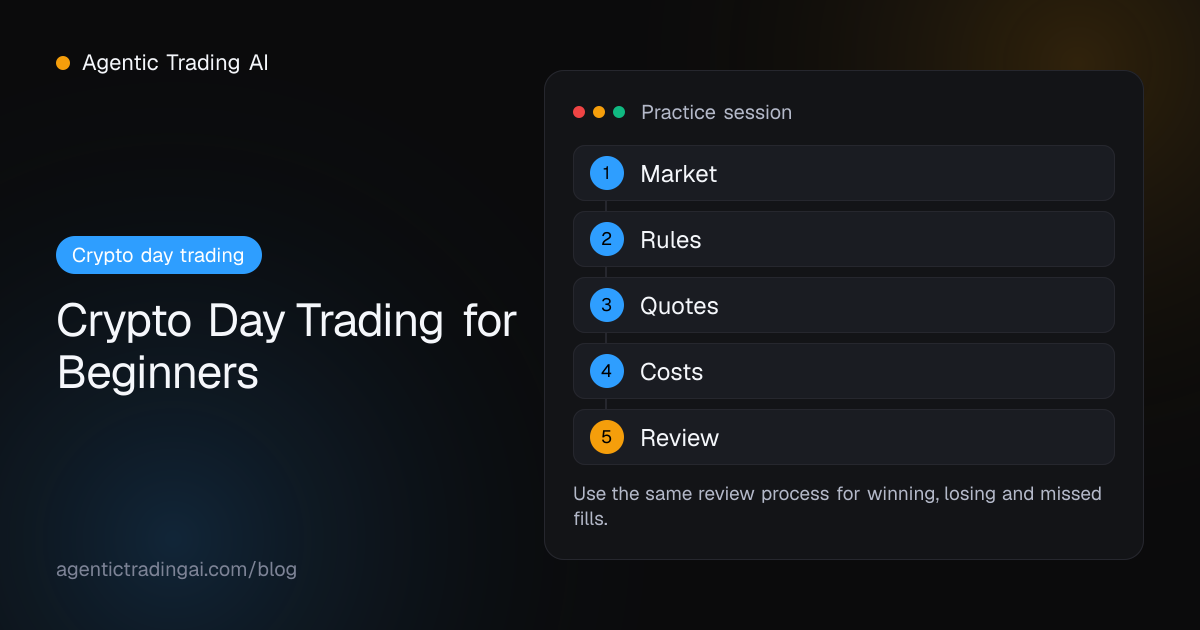 Up nextCrypto Day Trading for BeginnersLearn what crypto day trading involves, how fees and slippage affect a round trip, and how to plan and review a practice session without risking funds.