Crypto Day Trading for Beginners
Crypto day trading means opening and closing a position within the same trading session. A useful first session is a simulation. You can learn how quotes, order size and costs affect a round trip without connecting a wallet or funding an account.
Summarize with AI:
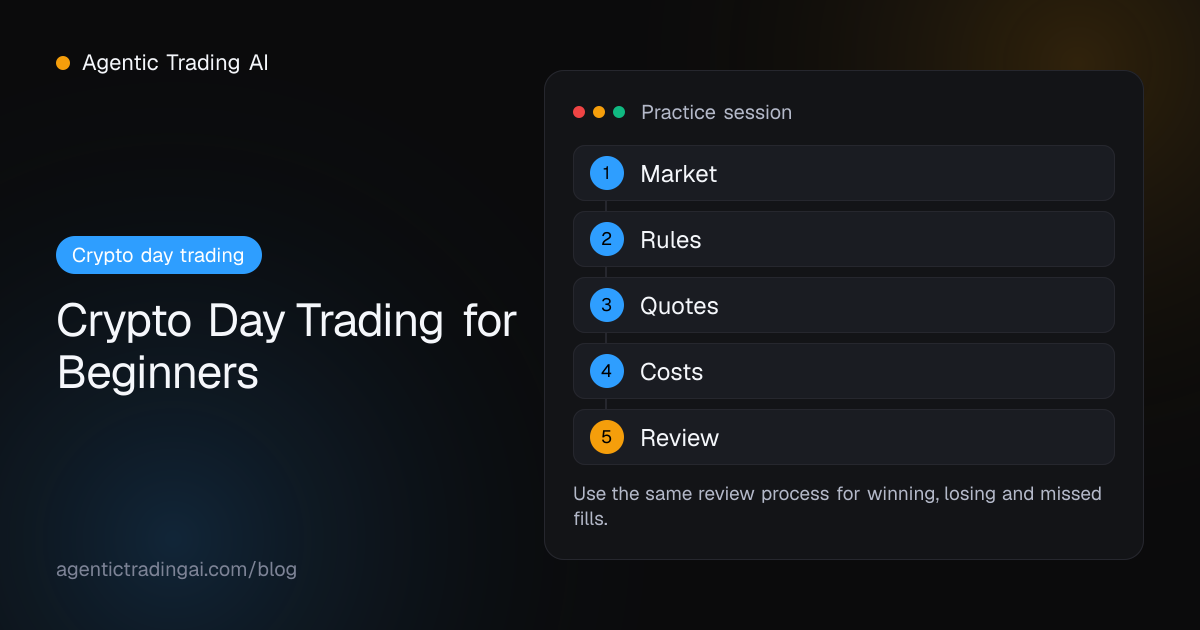
Define the session before watching the chart
Crypto spot markets generally trade around the clock, so write down your own start and end times in UTC. If you spend a Saturday morning observing prices, the data after that window belongs to another session. A fixed window also prevents you from quietly extending a practice session until a losing position looks better.
Start with one market, one venue, and a fixed hypothetical size. Write down what event you want to study, when you would record an entry, how you would record an exit, and what would cause a skip. Give every observation a timestamp and a brief reason so you can compare sessions later.
Work out the cost of one round trip
Suppose a hypothetical purchase costs $100 and a later sale would return $101.20 at the displayed prices. If the execution prices for that size reduce the gross result by $0.30 and combined fees cost another $0.60, the modeled gain is $0.30. If the same trade incurred $0.70 of price deterioration instead, it would show a $0.10 loss.
Those figures illustrate the arithmetic. Use the expected execution quote for your size, including the price impact it already reflects. Only add separate charges that the quote excludes. If the quote already incorporates a cost, counting it again distorts the exercise. Axiom describes which Solana transaction settings can affect costs in its Solana fee documentation.
Run a practice session with a small set of fields
- Record the market identifier, quote timestamp, and hypothetical size before making a simulated decision.
- Save the entry and exit quotes available at your chosen reaction delay alongside their fees.
- Mark an entry or exit as unfilled when a usable quote is missing. Keep those rows in the review.
- At the end, total the estimated costs and check how often your decisions followed your written rules.
Compare two sessions using the same assumptions before changing them. An apparently good result can disappear when a quote is stale or a closing trade is unavailable. The memecoin paper trading walkthrough shows how to record these cases in a journal.
Use platform data for the exercise
If you’re practicing on Solana, Axiom’s guide to token pages and watchlists explains where to review activity. GMGN’s wallet detail documentation shows how to look up public wallet activity. If a screen requires a funded account, use another public view for this exercise.
Build a Solana bot you can test first
The digital guide teaches a screening workflow and includes a log-only test phase for reviewing how the rules behave.
View the Solana trading bot guideKeep reading
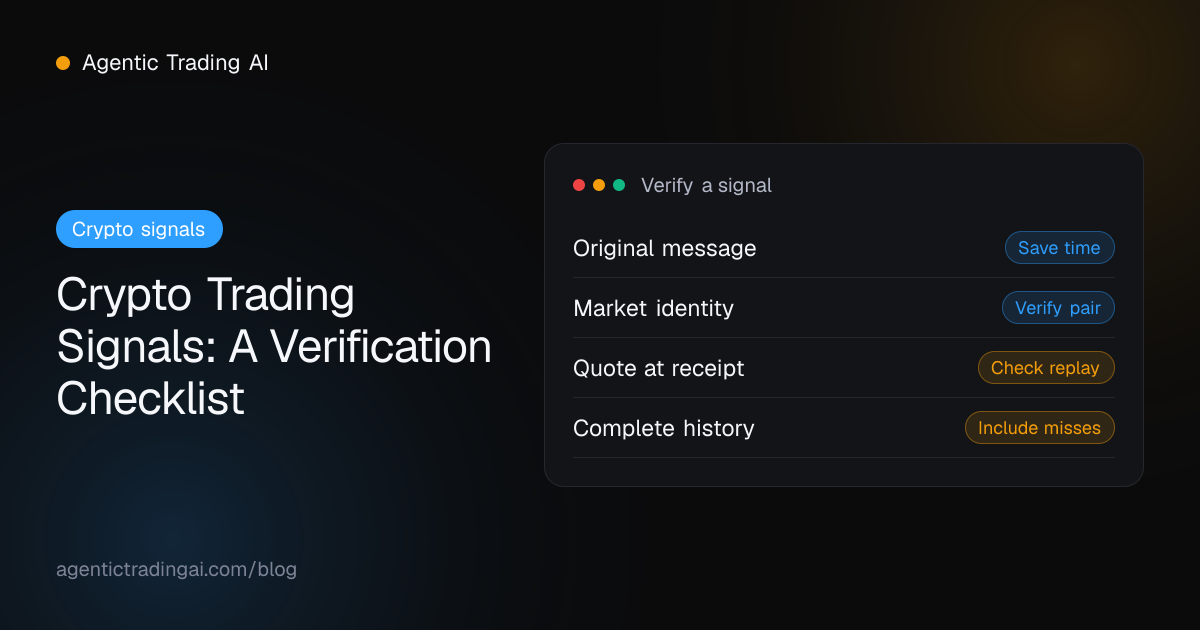 Up nextCrypto Trading Signals: A Verification ChecklistCheck crypto trading signals against original timestamps, market data and full result histories. Learn to spot missing evidence and common scam red flags.
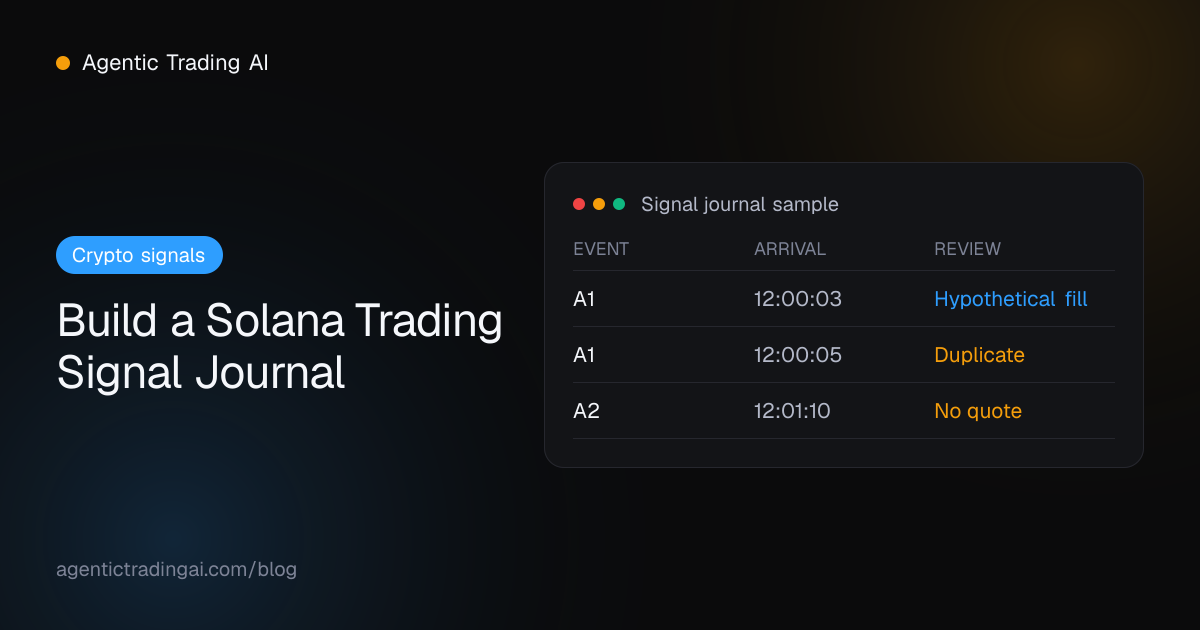 Up nextBuild a Solana Trading Signal JournalLog Solana alerts with mint addresses, transaction signatures, source and arrival timestamps. Review simulated fills, missed signals and duplicate alerts.