Crypto Trading Signals: A Verification Checklist
A crypto trading signal is an alert about a market event or a suggested action. An alert can help you find something to investigate. Before it goes into a practice log, check what the alert actually said, when it arrived and what the market did afterward.
Summarize with AI:
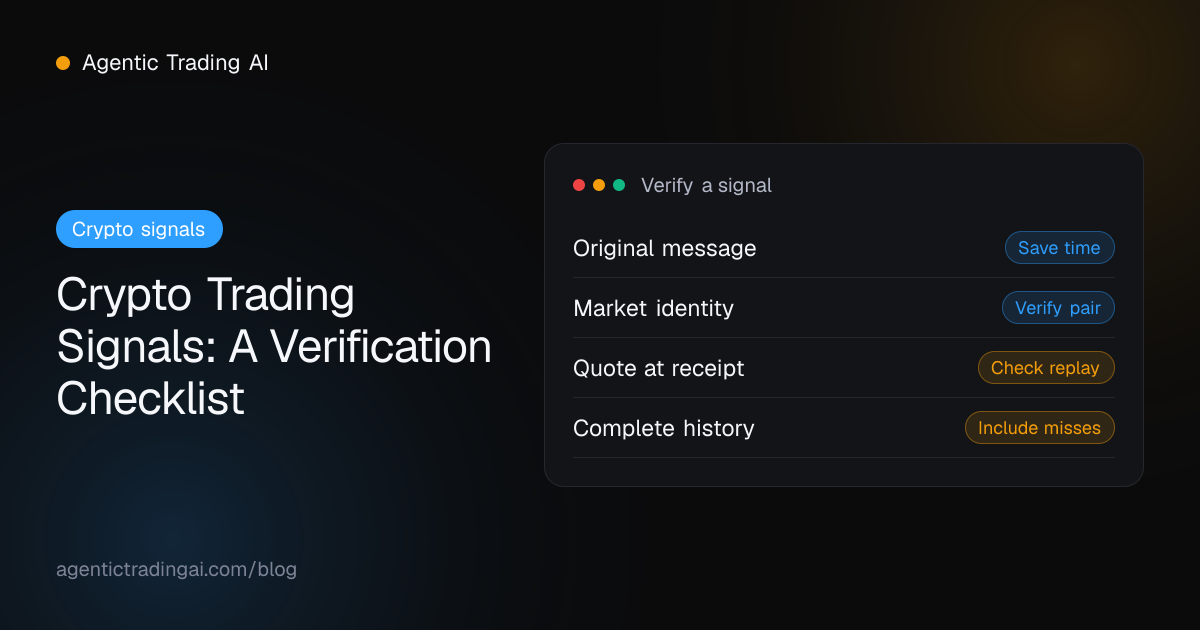
Can you verify the original alert?
Save the first version, publication time, receipt time and source. Write down the chain, token mint or contract address and venue. A ticker alone can point to several different assets. If the sender later changes an entry price or adds an exit, save that as a separate update with its own timestamp.
Ask what the alert is claiming. A posted wallet swap may be independently checkable against a transaction signature. A private recommendation with a price target is a different kind of claim. It needs a recorded publication time and a clear way to tell whether the rule actually triggered.
Could you have seen the advertised price after delivery?
Imagine a post showing a token chart at 12:00 UTC and a message that arrived at 12:04 UTC. A simulation needs a quote at or after 12:04, with one set of assumptions for size, delay and costs. If there’s no quote at that time or size, mark the result unverified or unfilled. The earlier chart price gives the reviewer information the recipient did not have.
With Solana memecoins, check the correct pool and inspect timestamped trades. A tiny chart print can reflect a smaller order than the one simulated. When possible, compare with a second market data source and save the relevant evidence beside the signal.
If the signal is based on a tracked wallet, inspect the transaction’s token movements. A transfer between addresses can appear as new holdings without involving a purchase. Treat a platform’s wallet label as a research lead and record what the transaction itself confirms.
How complete is the result history?
Pick a review window before seeing the outcomes and record every alert during it. Include losses, skips, duplicate alerts and messages that were too late to use. Keep simulated and executed results labeled separately. A gallery of winning screenshots leaves you without a denominator or enough information to calculate an after-cost return.
Treat guaranteed returns, pressure to pay in crypto and instructions to send funds to a wallet controlled by the operator as red flags. The CFTC’s digital asset fraud guide explains how these tactics can appear in promotions for signals, strategies and bots.
Review Solana alerts with public research views
Use a terminal’s token page to inspect the market and a wallet view to review the address activity. Axiom documents token pages and wallet tracking. GMGN describes the fields in its wallet detail view. Store the original alert separately in a signal journal so you can compare it with the on-chain record.
Learn to build your own research alerts
The ChatGPT digital guide covers building a Solana scanner with token filters and Telegram alerts.
View the ChatGPT trading bot guideKeep reading
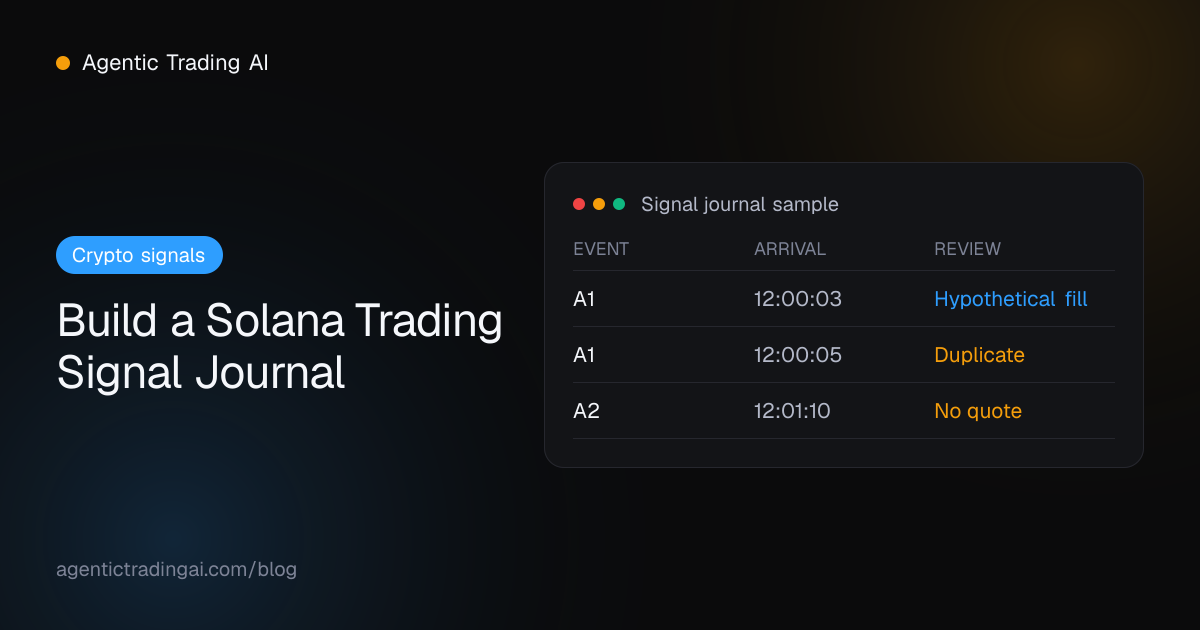 Up nextBuild a Solana Trading Signal JournalLog Solana alerts with mint addresses, transaction signatures, source and arrival timestamps. Review simulated fills, missed signals and duplicate alerts.
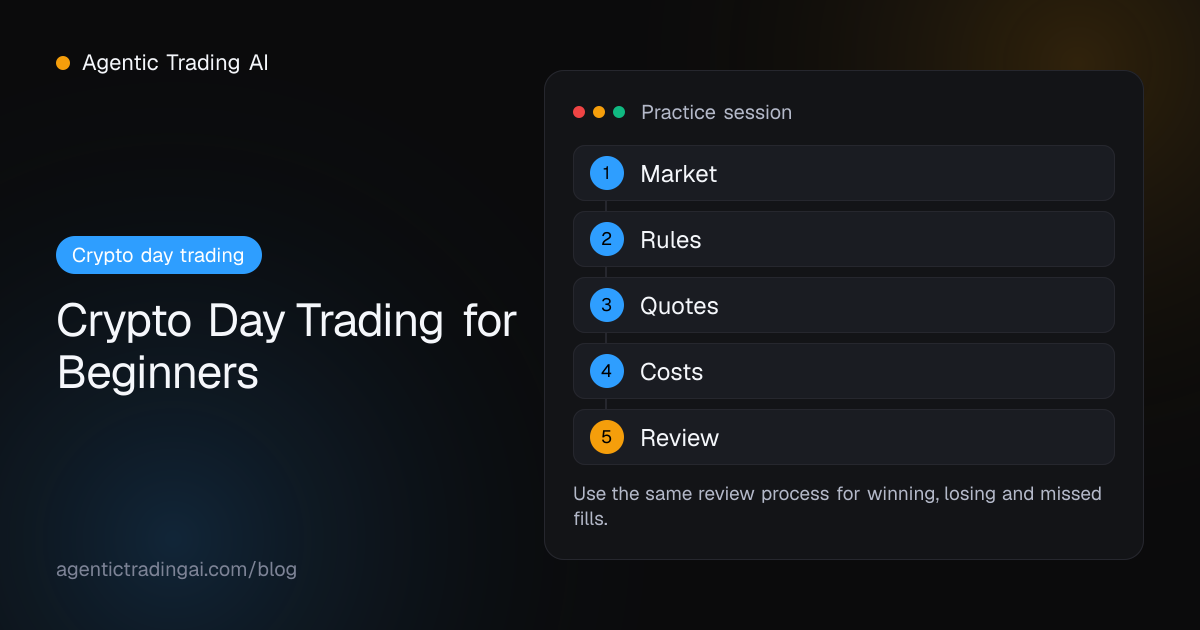 Up nextCrypto Day Trading for BeginnersLearn what crypto day trading involves, how fees and slippage affect a round trip, and how to plan and review a practice session without risking funds.