Grok Trading Bot: Build a Solana Memecoin Screener
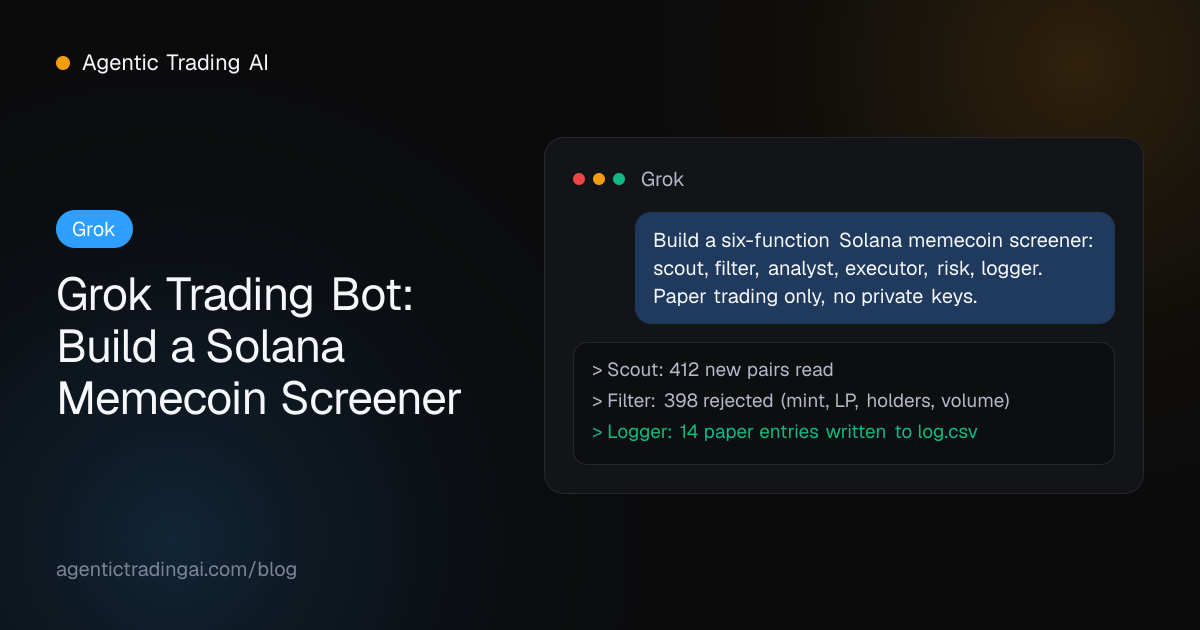
Grok can write the code for a Solana memecoin bot, but it doesn’t trade for you on its own. The viral “Grok Bot” setups are a set of agents running a strict filter checklist. Here’s how that structure works and how to build it yourself, starting with paper trades.
Summarize with AI:
What the viral Grok trading bot posts have in common
Posts on X show a terminal turning a small balance into thousands of dollars overnight. Look past the headline numbers and nearly every one describes the same system:
- A few named agents, often Scout, Filter, Analyst, Executor, Risk and Logger, each with one job.
- A hard filter list that rejects most new tokens: mint authority, liquidity lock, holder concentration, volume and the deployer’s history.
- Fixed risk rules, such as a set percentage per trade, a stop loss and a trailing exit.
- A log that records why each token was bought or rejected.
That structure is sound and worth copying. The results aren’t verified. Some posts quietly say “paper”, and a balance in a screenshot isn’t a trade history. Treat the overnight numbers as marketing and the agent design as the useful part.
What Grok actually does in the setup
Grok is the coding assistant. You describe the system, and it writes and debugs the Python or TypeScript. The finished script runs on your own computer or a small server, reads market data from public APIs and applies your rules. Grok’s edge over other assistants is X: in the Grok app it can search recent posts, which helps when you want to add a social-signal step. If you call Grok through the xAI API instead, check xAI’s current documentation for which search features are available.
The six agent roles, in plain terms
- Scout collects new Solana pairs from a public source such as DEX Screener.
- Filter rejects anything that fails your checklist. See the rug pull checker guide for what each check means.
- Analyst scores the survivors from 0 to 1 on liquidity, volume trend and holder spread.
- Executor records a simulated buy for anything above your score cut-off. Live orders come last.
- Risk enforces position size, the stop loss and the exit rule on every position.
- Logger writes the reason for every buy, sell and rejection so you can review the run.
“Agents” here can be six functions in one script. You don’t need separate AI models running for each role.
A Grok prompt you can try
Build a Python program for a Solana memecoin screener in paper-trading mode only. Split it into six functions: scout, filter, analyst, executor, risk and logger. Scout reads new pairs from the DEX Screener API. Filter rejects tokens with an active mint authority, unlocked liquidity, top 10 holders above 20% or hourly volume below a threshold I set. Analyst scores survivors from 0 to 1 and skips anything under 0.6. Executor records simulated buys at the current quote, including an estimate for fees and slippage. Risk applies a fixed position size, a stop loss and a trailing exit. Logger writes every decision and its reason to a CSV. No private keys, no live orders.
Run it for several days, then read the log. If you can’t explain why a token passed, tighten that rule before you change anything else. The memecoin paper trading guide covers how to judge a paper run honestly.
Before you let it trade real money
- Paper-trade first and include fees and slippage. Small-cap Solana tokens often move several percent on one order.
- Use a separate wallet holding only what you can afford to lose. Never paste a private key into Grok or any chat.
- Let only one part of the program place orders, with a hard spending limit in that code.
- Expect losses. Most new memecoins go to zero, and no filter list catches every rug pull.
Where the guides fit
The Grok Trading Bot Prompt Guide turns everything on this page into 35 step-by-step prompts, from the empty folder to extra rug filters, alerts and the live terminal. The Solana Memecoin Trading Bot Guide walks through this kind of build step by step, with a nine-prompt token screener that works in Grok, DeepSeek, ChatGPT or Claude. The AI Trading Bot Masterclass goes further into multi-agent workflows. Both are educational guides, not a ready-made bot or financial advice.
Get the Grok Trading Bot Prompt Guide
A 48-page digital guide with 35 copy-paste Grok prompts: the six-agent desk, rug filters, X sentiment, smarter exits, alerts and safe going-live steps.
View the Grok Prompt GuideKeep reading
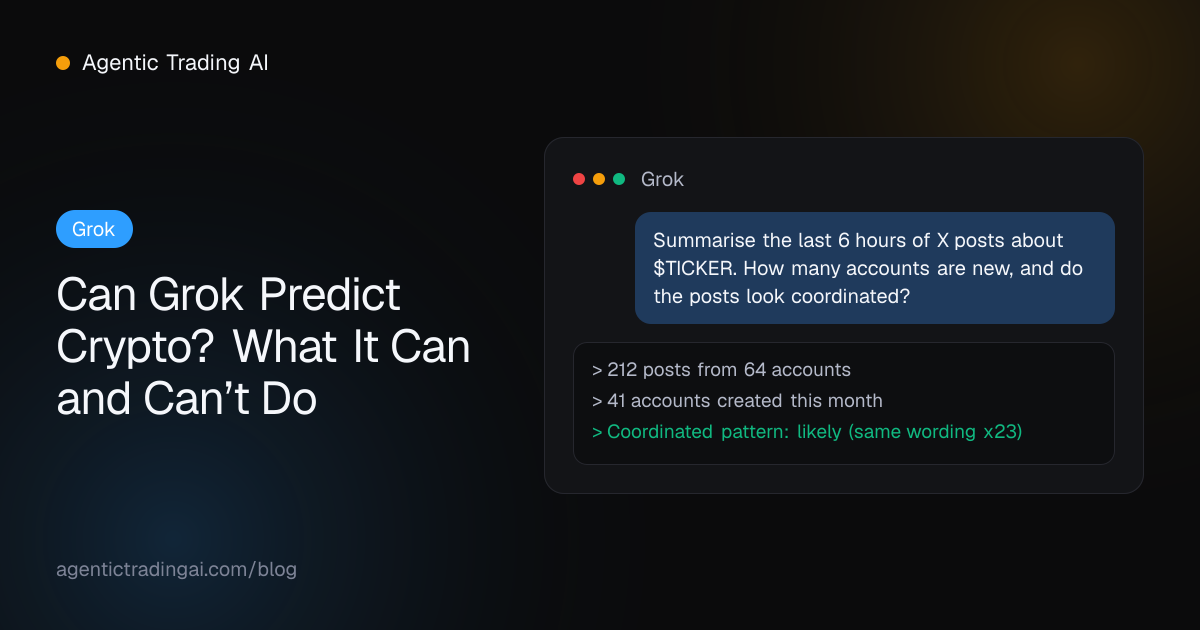 Up nextCan Grok Predict Crypto? What It Can and Can’t DoGrok can’t predict prices, but it can read X, spot shilling, explain contracts and write code. How to use it without fooling yourself.
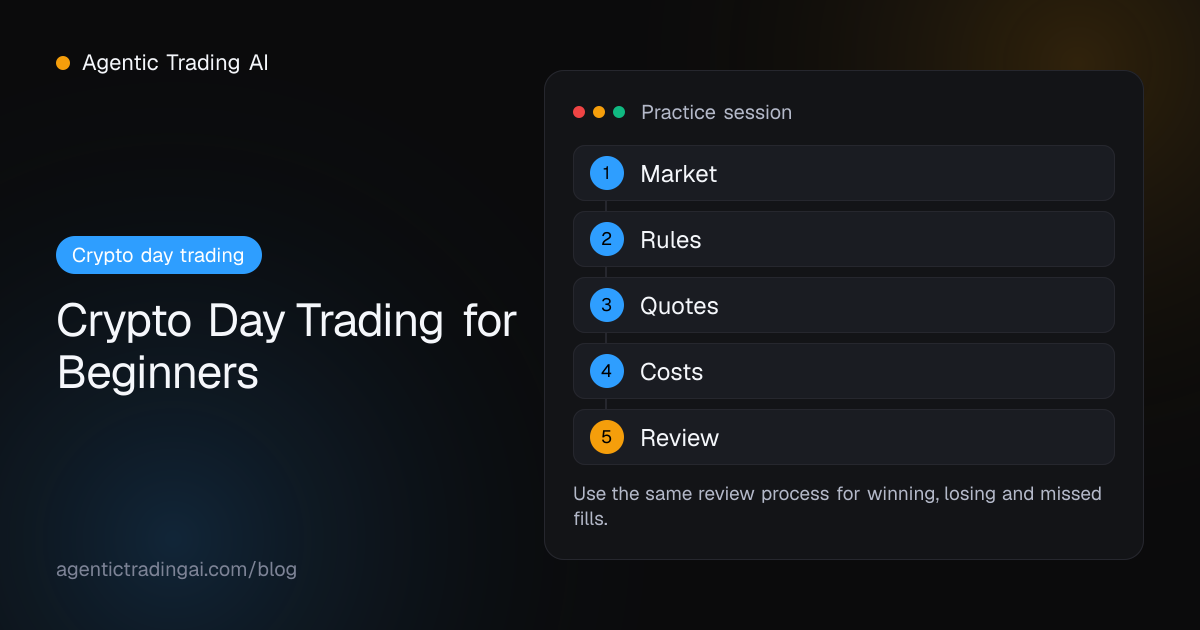 Up nextCrypto Day Trading for BeginnersLearn what crypto day trading involves, how fees and slippage affect a round trip, and how to plan and review a practice session without risking funds.