Memecoin Paper Trading: Practice Without Real Money
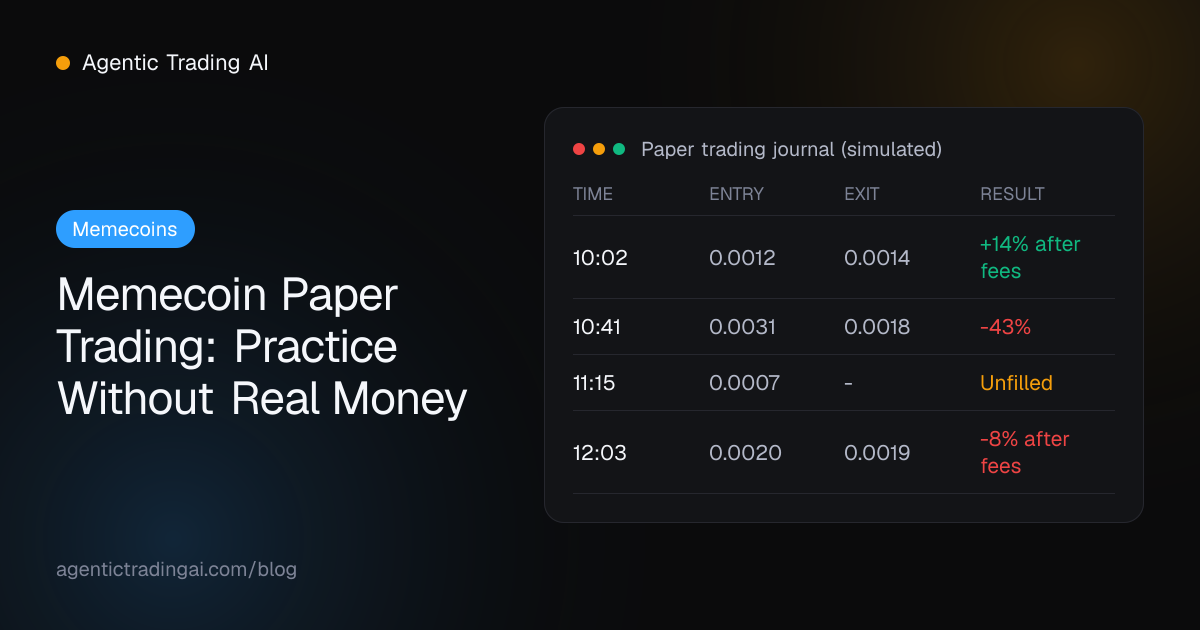
Memecoin paper trading means recording the trades you would make, at the prices you could really have got, without spending money. It’s the cheapest way to find out whether your rules work, and it trains the habit that saves most new traders: deciding before you click buy.
Summarize with AI:
Why paper trade meme coins first?
- Most new meme coins lose most of their value, so mistakes are expensive.
- Prices move in seconds, and emotions take over quickly with real money.
- A written record shows whether your wins come from your rules or from luck.
Three ways to paper trade meme coins
1. A simple trading journal
A spreadsheet works. For each simulated trade, write down the token’s mint address, the time, why it passed your checks, the quoted buy price for your size, your planned exit, and the result.
2. Paper trading tools
Some terminals and browser extensions offer a simulated mode with fake balances on live charts. They’re convenient; check whether they include fees and price impact, or the results will look better than reality.
3. A log-only bot
A bot that screens tokens and writes down what it would buy and sell is a paper trading tool too. It applies your rules the same way every time, around the clock, without emotions.
How to make paper trades realistic
- Use real quotes for your size. Record the quote for the amount you’d actually trade, not the chart price.
- Add your delay. If you’d need 30 seconds to react, use the price 30 seconds after the signal.
- Include all costs. Platform fees, priority fees and slippage add up fast on small trades.
- Check the sell side. Record whether you could have sold, and at what price, when your exit rule triggered.
- Count the misses. Trades you couldn’t have filled are results too; mark them unfilled.
What to measure
- Win rate: how many trades ended in profit after costs.
- Average win vs average loss: a low win rate can still work if losses are small.
- Worst losing streak: how much your balance would have dropped at the worst point.
- Rule breaks: how often you would have ignored your own rules.
Run at least a few weeks or a few dozen trades before drawing conclusions, and change one rule at a time.
When to move to real money
Only when the paper results hold up after costs, and only with an amount you can afford to lose entirely. Expect live results to be a little worse than paper ones; real fills and nerves are never perfect.
Automate paper trading with a bot
The Solana Memecoin Trading Bot Guide includes a log-only testing phase: the bot screens new tokens, runs rug checks, and records what it would do before you enable real orders through Jupiter. It’s built with ChatGPT prompts, so you don’t need to write the code yourself.
Frequently asked questions
Is memecoin paper trading accurate?
Only if you include real quotes, delays and costs. A simulation that uses chart prices will look much better than live trading.
How long should I paper trade?
Long enough to see a few dozen trades and at least one losing streak. If your rules can’t survive on paper, they won’t survive with money.
Build a bot that paper trades for you
Screen Solana meme coins, run rug checks and log every simulated trade before going live.
View the Solana Memecoin Trading Bot GuideEducational content only, not financial advice. Crypto trading carries a high risk of loss.
Keep reading
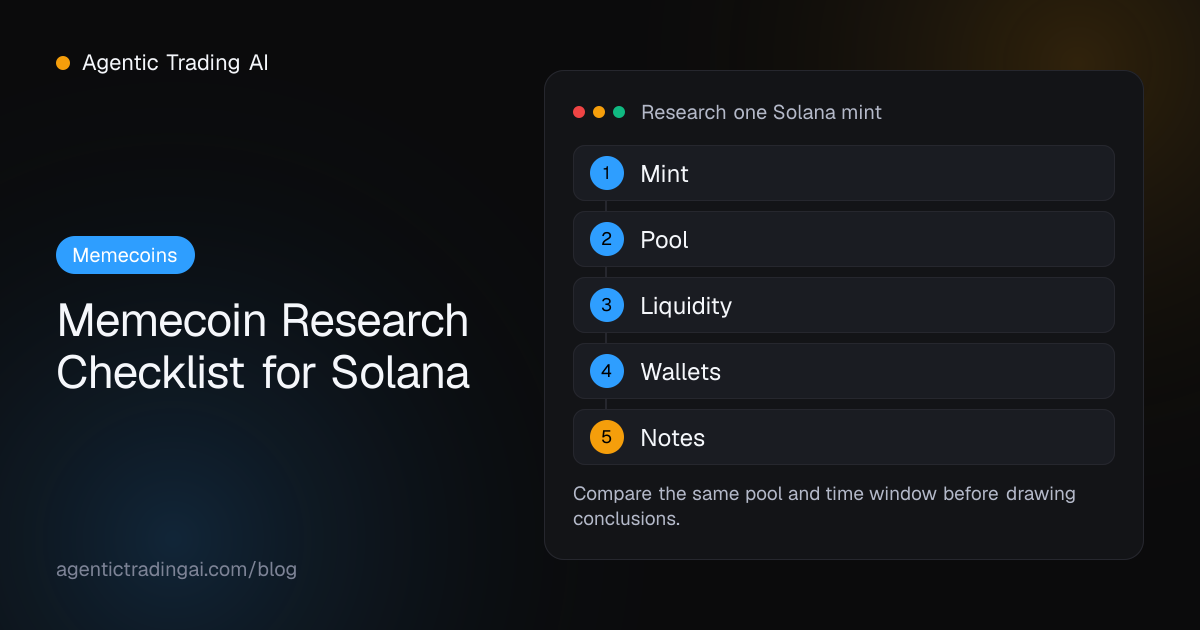 Up nextMemecoin Research Checklist for SolanaUse a read-only Solana memecoin research checklist to verify a mint, compare charts across platforms, and document liquidity and wallet activity.
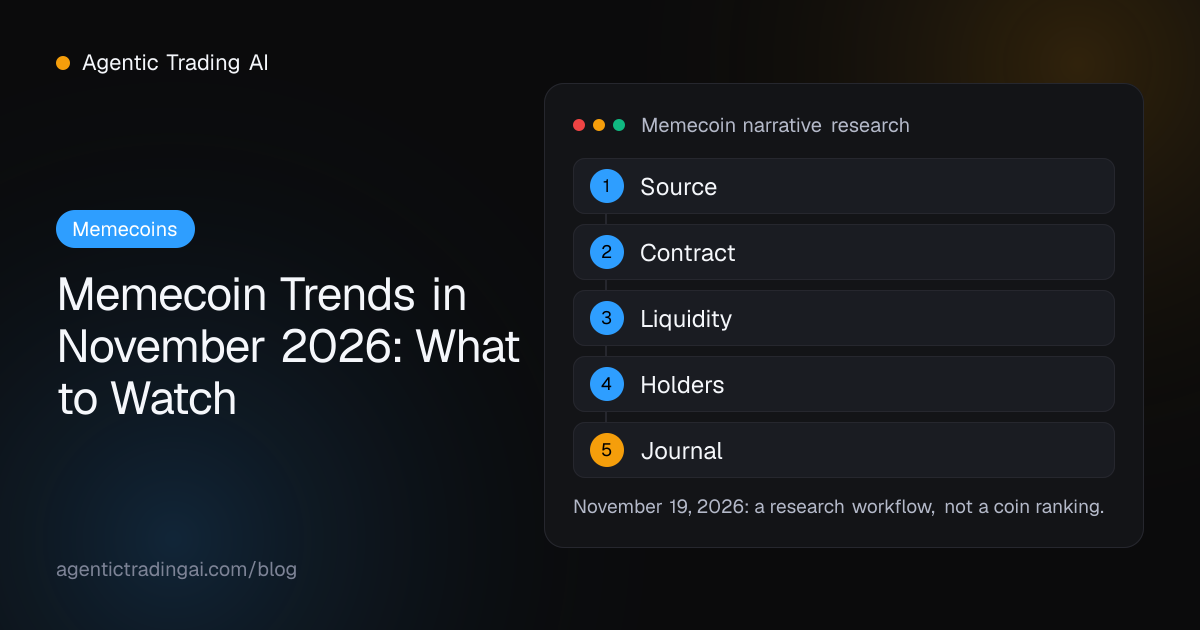 Up nextMemecoin Trends in November 2026: What to WatchExplore November 2026 memecoin narratives: AI agents, stock-themed tokens and launchpad competition, with a practical checklist for researching each trend.