Polymarket Backtesting: How to Test a Bot Strategy
Polymarket backtesting starts with an outcome token, a date range, and a rule you can evaluate using data from that point in time. Polymarket’s price history documentation describes how to fetch timestamped prices for a token. Save the data range and interval alongside your results.
Summarize with AI:
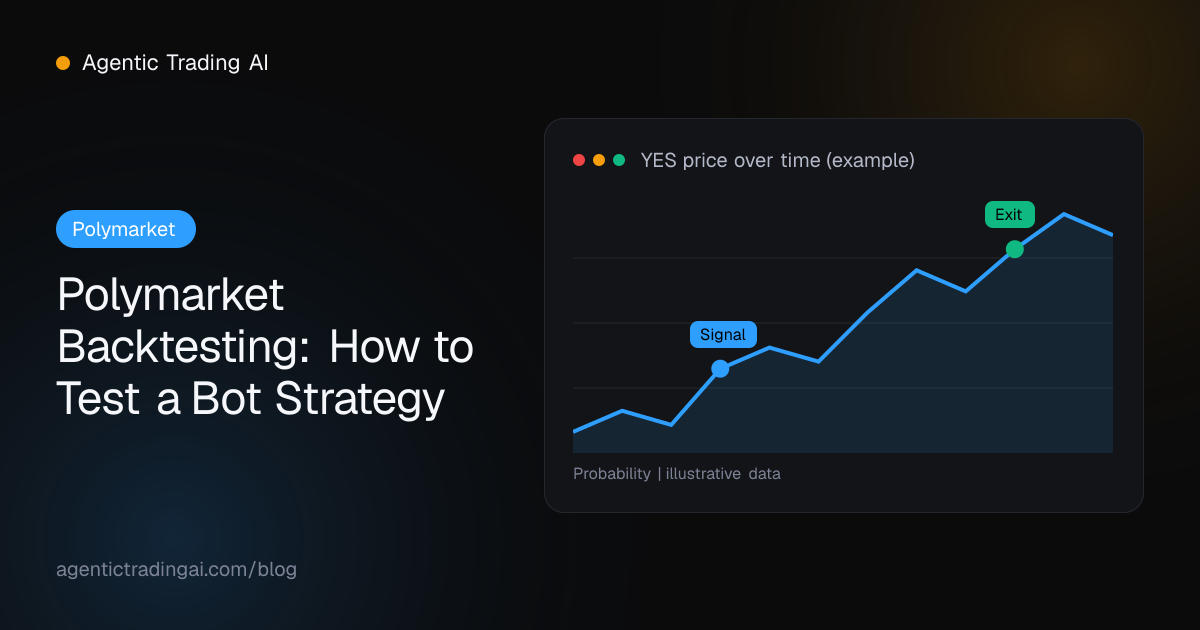
Keep a signal ledger and a fill ledger
- Write the decision rule first. For example, log a signal if the sampled price crosses a threshold you pick for the exercise. Record the timestamp used to make the decision.
- Choose how fills will be estimated. If you have historical bid and ask data, use the side of the book a marketable order would face and account for available depth. If you only have sampled prices, label results as a signal replay or make the spread and fill assumptions explicit.
- Keep missed trades in the ledger. If there is no eligible later observation or the market closes first, record why the order would have stayed unfilled.
Example: model the spread before calling it a win
Imagine a strategy flags a contract at a sampled price of $0.47 and later flags an exit at $0.51. That is a $0.04 move per share. If an entry could have filled at $0.49 and an exit at $0.49, the gain would have been zero before fees. Use hypothetical fills like these to show how sensitive the result is to trading costs. Historical prices alone cannot establish those fills.
Test on markets you did not use to tune the strategy
Set your thresholds on one set of markets, then run them unchanged on another set. Include markets with little activity, sparse data, and skipped trades. Track the number of signals, the number of modeled fills, the assumptions used, and the worst run of outcomes. For any test that holds positions to settlement, bring market resolution into the ledger only at the time it became available.
A repeatable backtest helps you assess whether the rule behaves as designed. Try replaying the same data with a wider assumed spread or a longer order delay to see how much those assumptions drive the result.
Work through a Polymarket bot project
The digital guide includes three backtesting strategies and a Claude Code workflow for building the project.
View the Polymarket Trading Bot GuideKeep reading
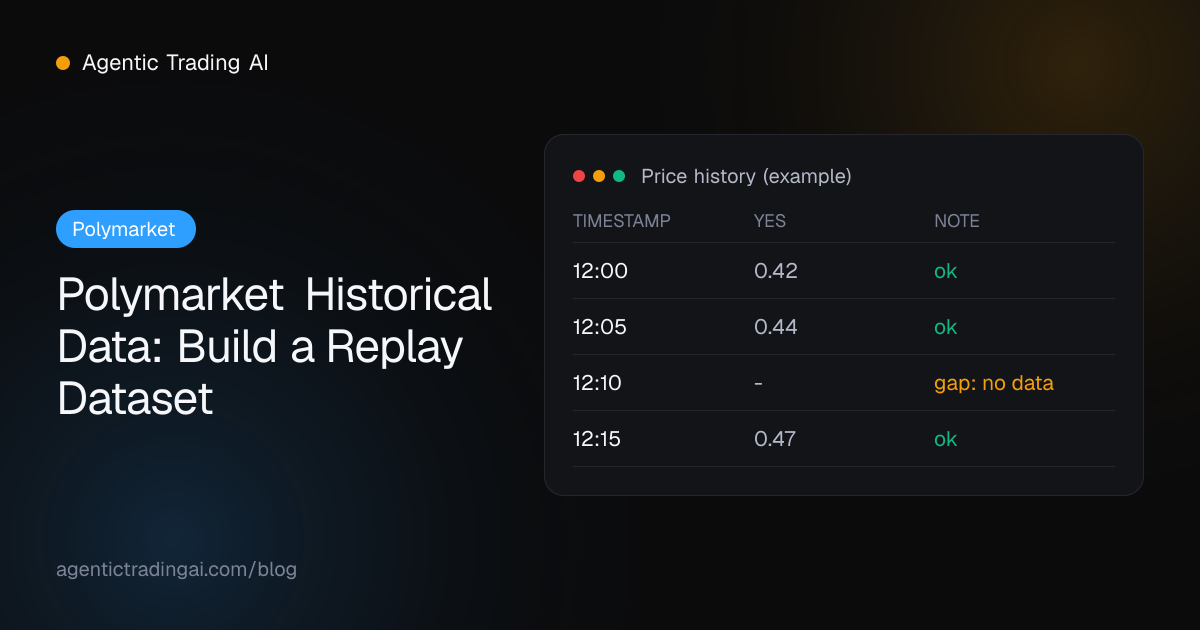 Up nextPolymarket Historical Data: Build a Replay DatasetFind the right outcome token, save timestamped Polymarket prices, and check for gaps before replaying a strategy.
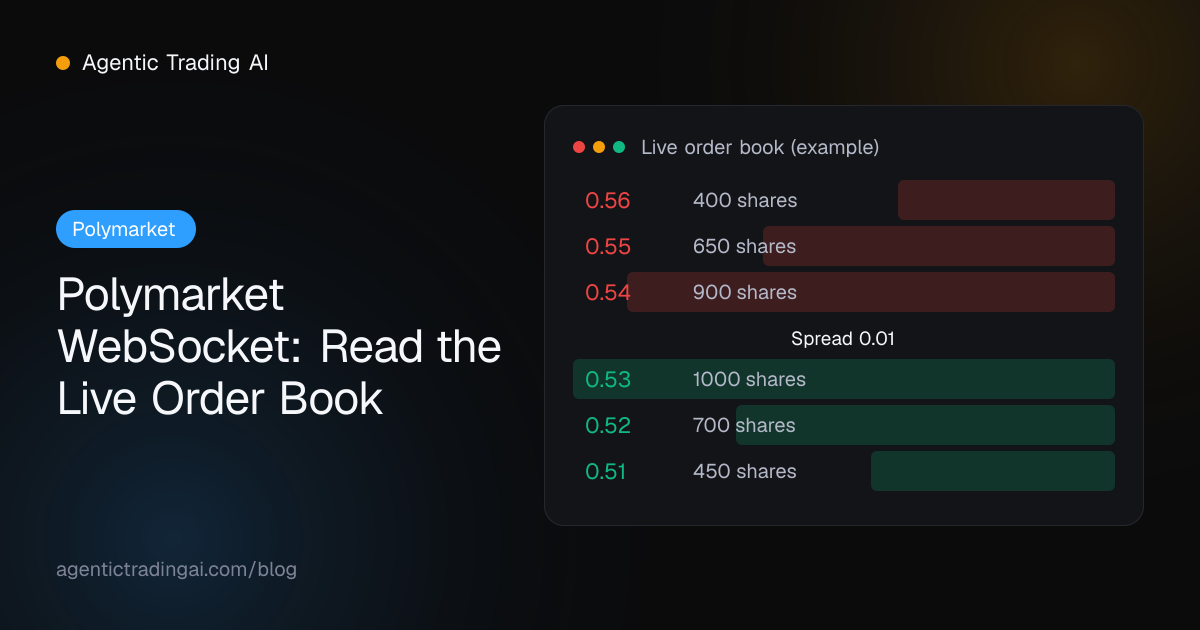 Up nextPolymarket WebSocket: Read the Live Order BookBuild a read-only Polymarket WebSocket feed and test what your bot does when the book goes stale or disconnects.