pump.fun vs bonk.fun: Solana Launchpads Explained
Most new Solana memecoins are born on a launchpad. pump.fun started the trend, and bonk.fun (also known as LetsBonk) became its biggest rival. They work almost the same way, which means they share the same trap: launching a token costs next to nothing, so thousands appear every day and nearly all of them fail.
Summarize with AI:
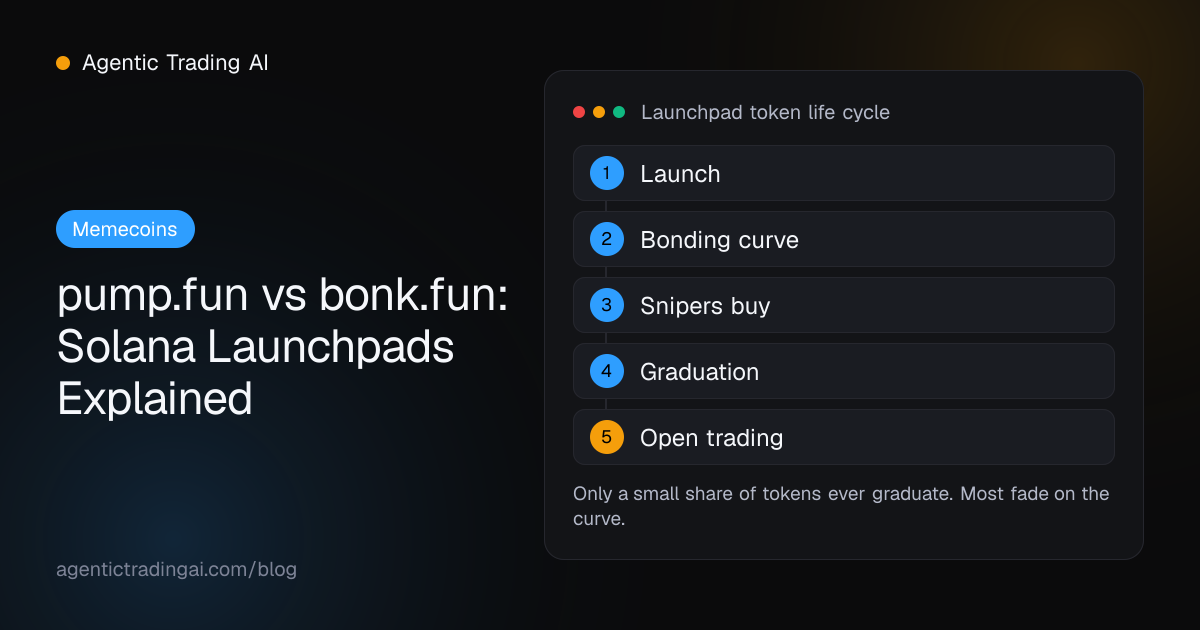
How a launchpad token works
- Launch. Anyone creates a token with a name, picture and ticker in a minute or two.
- Bonding curve. Early buyers trade against a price formula instead of a normal pool. Each buy pushes the price up the curve; each sell pushes it down.
- Graduation. If enough is bought to reach the curve’s target, the token “graduates” and its liquidity moves to a regular pool on a decentralised exchange.
- Open trading. After graduation it trades like any other Solana token, and wider tools like DEX Screener pick it up.
Only a small share of tokens ever graduate. Everything else stays on the curve, slowly fades, and the people who bought in are left holding something nobody wants.
pump.fun vs bonk.fun at a glance
| pump.fun | bonk.fun (LetsBonk) | |
|---|---|---|
| Launched | 2024 | 2025 |
| Community | The original, biggest brand | Built around the BONK community |
| After graduation | Moves to pump.fun’s own pool | Moves to a Raydium pool |
| Who wins most | Creators, early snipers and the platforms’ fees, not late buyers | |
Launchpads keep changing their fees, graduation targets and where tokens migrate to, so check each platform’s own documentation for the current numbers.
Why late buyers usually lose
- Bots buy first. Sniper bots buy in the first seconds, then sell into the people who arrive from X or Telegram.
- Creators can hold a lot. Many launches are “bundled”: the creator buys through several fresh wallets so it looks like organic demand.
- The curve works both ways. When early buyers sell, the price falls fast along the same curve that made it rise.
- Attention moves on. Thousands of new tokens compete every day. Most lose their buyers within hours.
If you’re going to trade launchpad tokens anyway
- Wait for graduation, and then wait a little longer. The minutes right after migration are the most violent.
- Check who holds the supply. Clusters of fresh wallets that bought in the first seconds are a red flag.
- Look at the creator wallet’s history. Someone who launched ten tokens this week is not building a community.
- Decide your exit before you buy, and size every trade so a total loss doesn’t matter.
The rug pull checker guide explains each of these checks step by step.
Let a filter say no for you
The Grok Trading Bot Prompt Guide includes prompts for deployer history, bundled launches and pump.fun bonding-curve tokens, all tested in paper mode first.
View the Grok Prompt GuideNot affiliated with pump.fun or bonk.fun. Educational content, not financial advice.
Keep reading
 Up nextMemecoin Research Checklist for SolanaUse a read-only Solana memecoin research checklist to verify a mint, compare charts across platforms, and document liquidity and wallet activity.
 Up nextMemecoin Trends in November 2026: What to WatchExplore November 2026 memecoin narratives: AI agents, stock-themed tokens and launchpad competition, with a practical checklist for researching each trend.